
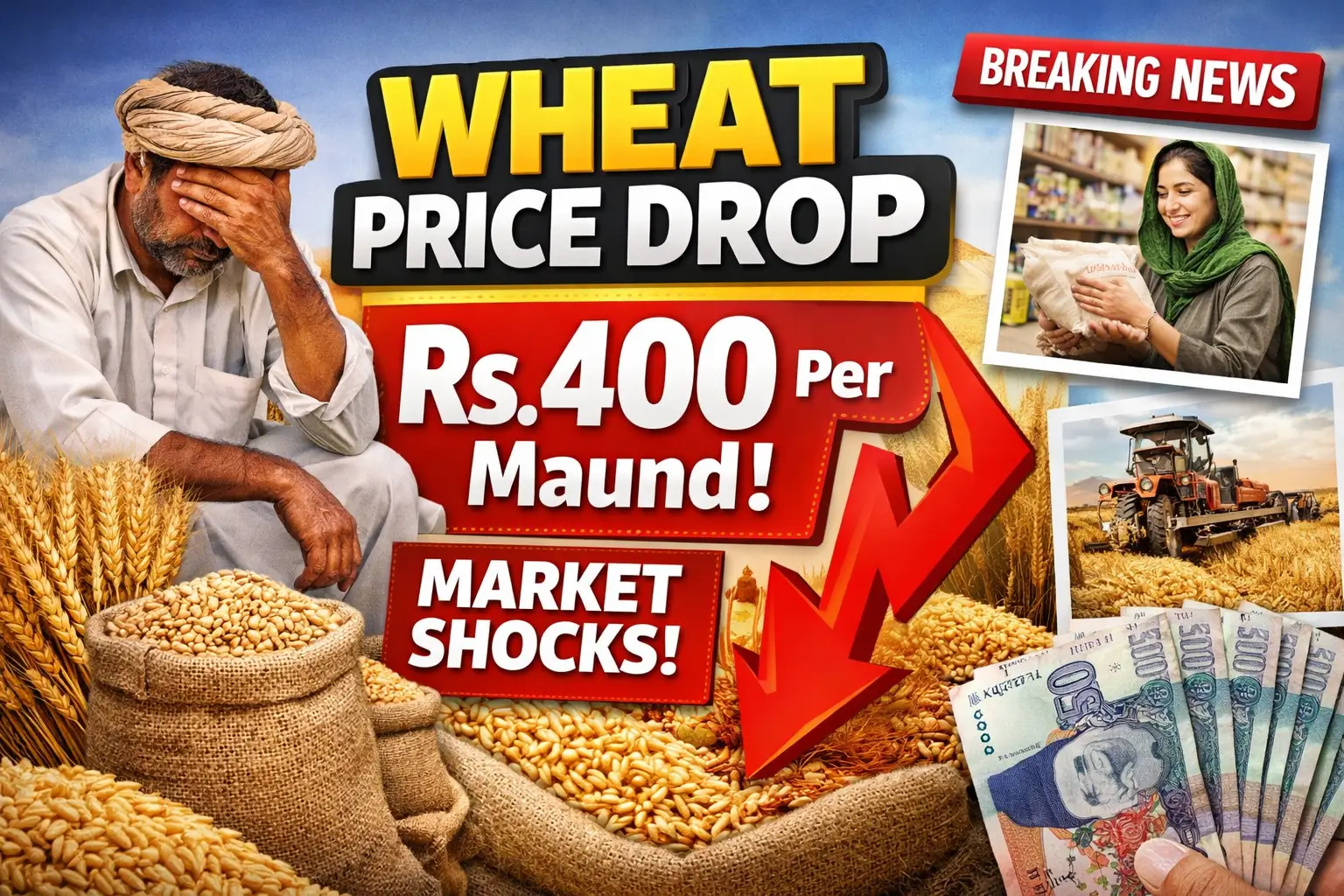
Breaking News: Wheat Price Drop by Rs.400 per Maund Shocks Market. Pakistan’s wheat market has witnessed a surprising shift as wheat prices fell by Rs.400 per Maund. This price drop has raised concerns among farmers, while bringing some relief to consumers. As inflation continues to affect daily life, this dramatic change has caught the attention of traders, government authorities, and households across the nation.

The Wheat Price Drop
The wheat price drop of Rs.400 per Maund is a major development in Pakistan’s open wheat market. This decrease is largely due to an increased supply and reduced government procurement, leading to price fluctuations. The decision has had a ripple effect on both farmers and household consumers alike. Here’s a breakdown of the situation:
| Commodity | Wheat |
|---|---|
| Price Change | Rs.400 per Maund |
| Market Type | Open Market |
| Affected Groups | Farmers & Consumers |
| Government Role | Policy & Procurement |
| Season | Rabi Crop |
| Price Impact Area | Nationwide |
| Source | Official & Google |
Why Did Wheat Prices Drop?
Several factors have contributed to the sudden drop in wheat prices:
1. Higher Supply
A larger-than-expected wheat harvest has increased supply across the country. Farmers were able to produce more than anticipated, putting downward pressure on prices.
2. Limited Government Procurement
The government’s reduced buying activity from open markets has left wheat prices to fluctuate based on market forces. As procurement slowed, traders saw an opportunity to buy at lower prices.

3. Storage Pressure
With limited storage space, farmers are forced to sell their wheat quickly to avoid spoilage. This urgency has increased wheat availability and further decreased prices.
4. Market Competition
Increased activity from traders seeking to capitalize on available stock has intensified price competition, forcing wheat prices to drop.
Impact on Farmers
While the wheat price drop brings relief to consumers, farmers are facing severe financial difficulties. Here’s how they are affected:
1. Lower Income
Small farmers, in particular, are struggling to recover their expenses. With prices dropping, their profit margins have been squeezed.

2. Rising Input Costs
Although wheat prices are down, the cost of farming inputs like seeds, fertilizers, and labor remains high. This means farmers are still operating at a loss.
3. Debt Pressure
Many farmers rely on loans to fund their crop production. With reduced wheat prices, it becomes increasingly difficult for them to repay their debts, leading to financial instability.
4. Market Uncertainty
The unpredictable nature of market prices creates uncertainty. Farmers can’t rely on stable income, making it hard to plan for the future.
How Consumers Are Affected
For consumers, the wheat price drop by Rs.400 per Maund could bring some much-needed relief:

1. Cheaper Flour
The most immediate effect is that atta (flour) prices may begin to fall as wheat becomes more affordable for flour mills. This will likely result in lower bread and food costs.
2. Inflation Relief
With food being one of the biggest contributors to inflation, cheaper wheat will help ease the burden on family budgets, particularly for low-income households.
3. Better Availability
The increased supply of wheat means that markets will likely see better availability of wheat and flour products, easing the purchasing process.
4. Budget Control
With reduced wheat prices, consumers will have more room to manage other household expenses. This is especially crucial as the cost of living continues to rise.

How Are Wheat Prices Determined?
Understanding the wheat price drop requires knowledge of how prices are usually set. Here’s a step-by-step explanation:
- Wheat Harvesting
Wheat is harvested and enters local markets, also known as mandis. - Supply vs. Demand
Supply levels are compared with national demand. If supply exceeds demand, prices fall. - Government Procurement
The government announces its procurement policies and sets the minimum support price. - Traders Set Prices
Traders base their buying prices on the available supply and government procurement policies. - Storage and Distribution
Storage capacity impacts the speed at which farmers sell their crops. The faster they sell, the more supply enters the market. - Mills Purchase Wheat
Flour mills buy wheat in bulk to process into flour, which also impacts the pricing structure. - Retail Flour Prices
The cost of wheat affects the final retail price of flour, which adjusts gradually based on market conditions.
Government’s Role and Official Updates
The Ministry of National Food Security has explained that market forces are primarily responsible for the wheat price fluctuations. According to official updates, the ministry is closely monitoring the situation and taking necessary actions. Information for this article has been sourced from official government portals and top-tier news sources.
Here’s how to get in touch with the Ministry for updates or complaints:
- Helpline: 051-9209033
- Working Hours: Monday to Friday (9:00 AM – 5:00 PM)
- Official Website: Ministry of National Food Security
What Comes Next for Wheat Prices?
The wheat price drop has created mixed reactions across the nation. While consumers are enjoying lower wheat costs, farmers are feeling the pressure of reduced income and mounting debt. The key issue now is whether the government will intervene to stabilize prices and support farmers.

As wheat prices continue to fluctuate, a balanced approach will be necessary. Protecting the interests of farmers while maintaining affordable food prices for consumers will be crucial moving forward.
FAQs
Q1: Why did wheat prices fall by Rs.400 per Maund?
The primary reasons for the price drop include higher wheat supply, reduced government procurement, and increased competition among traders.
Q2: How does this wheat price drop affect consumers?
Consumers are expected to benefit from lower atta prices, leading to savings on food expenses and relief from inflation.
Q3: How will this affect farmers?
Farmers are facing reduced income and debt pressure due to lower wheat prices, while input costs remain high.
Q4: Will the government intervene in wheat pricing?
The government is closely monitoring the situation and may introduce policies to support farmers and stabilize prices.
Conclusion
In conclusion, the wheat price drop of Rs.400 per Maund has sent shockwaves through Pakistan’s agricultural and consumer sectors. While consumers stand to gain from cheaper flour, farmers are grappling with income loss and market instability. Going forward, it’s essential that government policies strike a balance to protect both consumers and farmers. For accurate market updates, always rely on official government sources.