
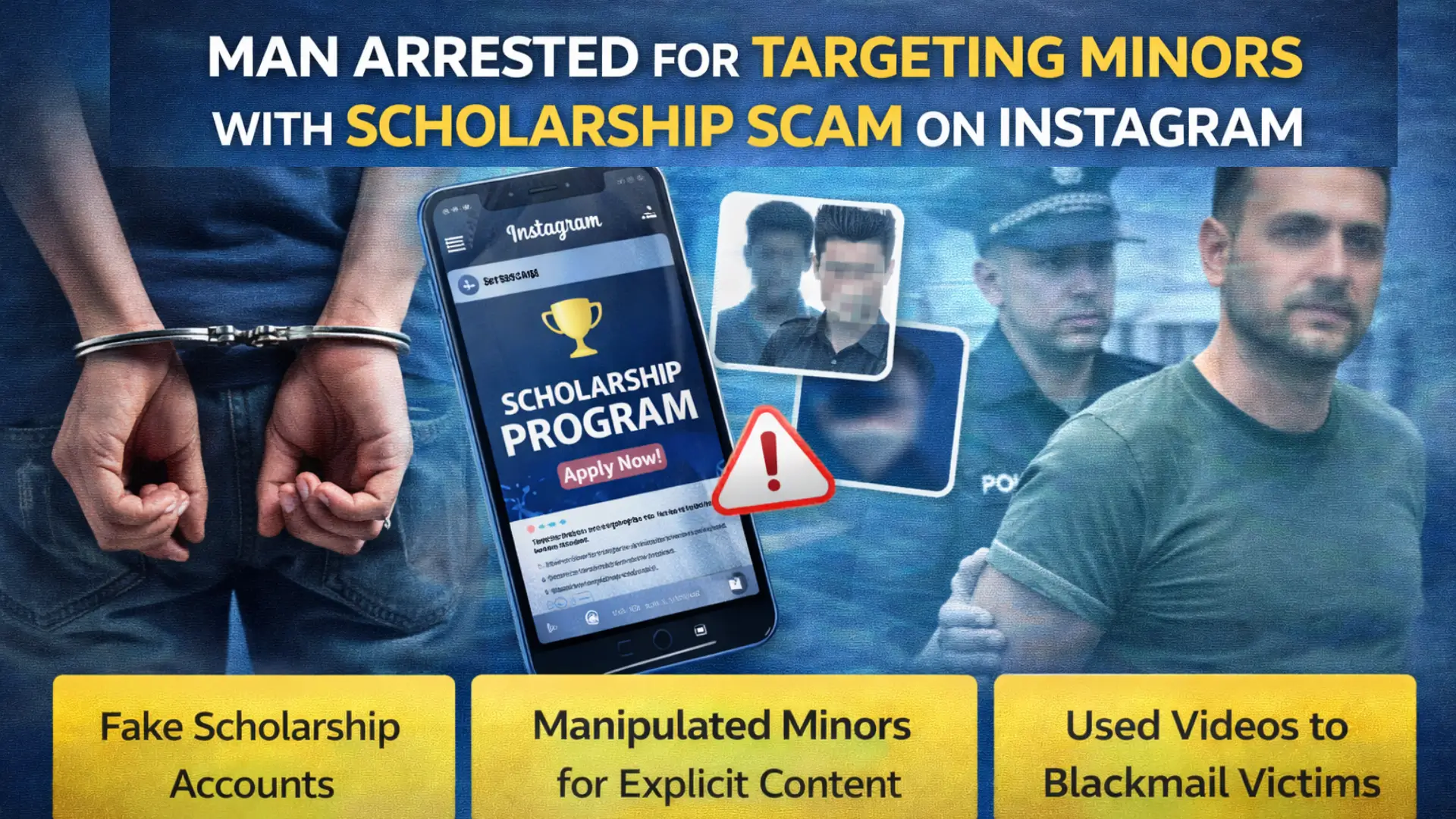
Man Arrested for Targeting Minors With Scholarship Scam on Instagram. In a shocking turn of events, a Rawalpindi resident has been arrested for exploiting minors through fake scholarship scams on Instagram. This incident, which unfolded in 2026, highlights the growing dangers of online threats targeting vulnerable children. Let’s break down how this scam operated and the consequences for both the victims and the perpetrator.

The Scholarship Scam on Instagram
Online scams are nothing new, but this particular case has caught widespread attention. A man from Rawalpindi used Instagram to lure minors into a false promise of scholarship opportunities. Posing as a legitimate scholarship program, the man created multiple fake accounts to interact with children, exploiting their trust.
How the Scam Worked
The accused man reached out to minors, promising them financial aid through non-existent scholarships. As a result, many children were convinced to share personal details, which eventually led to more severe exploitation. Investigators found that the man used these accounts to groom minors and manipulate them into sharing explicit content.

The Impact on Victims: A Deeply Disturbing Story
The victims, primarily minors, were subjected to not only manipulation but also threats. Once the accused had obtained sexually explicit content, he used it to blackmail the children, threatening to expose them unless they complied with further demands.
Grooming and Blackmail Techniques
The suspect employed grooming tactics, slowly building trust with the children before coercing them into sharing explicit material. This method is often used by online predators to exploit vulnerable individuals, and the consequences for the victims can be long-lasting. The criminals behind such scams prey on trust, often using false promises to lure children.

How Authorities Caught the Perpetrator
After a thorough investigation, the Pakistan National Cyber Crime Investigation Agency (NCCIA) was able to identify the individual behind this disturbing crime. A technical forensic analysis of the suspect’s mobile phone revealed extensive evidence of criminal activity, including:
- Hundreds of files containing Child Sexual Abuse Material (CSAM)
- Communication with multiple WhatsApp accounts, likely used for the distribution of illegal content
- Links to EasyPaisa accounts for the transmission and sale of exploitative materials
The investigation revealed that the scammer used a fake Instagram profile to impersonate a female, targeting another minor. Investigators also discovered that the scammer had altered his smartphone’s IMEI number, a clear violation of Pakistani electronic fraud laws.

The Legal Consequences: What Happens Next?
The accused has been charged under various sections of the Prevention of Electronic Crimes Act (PECA) 2016, as well as sections of the Pakistan Penal Code (PPC). These charges include cyberstalking, online exploitation, and illegal use of digital platforms to harm minors.
Investigations are still ongoing, and more individuals, including potential abettors and facilitators, are being identified. As a result of these charges, the case has raised significant concerns about online safety, particularly the need for stricter measures to protect children from online predators.

Protecting Your Children Online: How to Stay Safe
This case is a stark reminder of the importance of monitoring children’s online activity. To prevent your child from becoming a target, follow these essential tips:
- Monitor Social Media Accounts: Keep track of your child’s Instagram and other social media accounts. Ensure their privacy settings are updated to limit who can contact them.
- Educate Your Child: Talk to your children about the dangers of interacting with strangers online, especially when promises of prizes or scholarships are involved.
- Use Parental Control Software: Many apps allow you to monitor and control what your child can see and do online.
- Report Suspicious Activity: If you notice anything unusual, report it immediately to the relevant authorities, such as the NCCIA or other local cybercrime units.
FAQs About Online Safety
1. What is the role of the NCCIA in cybercrime cases?
The NCCIA is responsible for investigating and addressing cybercrime in Pakistan. It handles cases related to online exploitation, scams, and illegal activities on the internet.

2. How can I report online abuse or scams?
If you suspect your child is being targeted online, report it to the National Cyber Crime Reporting Centre (NCCRC) immediately. They can take swift action to investigate and protect potential victims.
3. Are there any tools to track harmful online behavior?
Yes, many parental control tools are available that allow you to monitor your child’s online behavior, such as what they search for and who they communicate with on social media platforms.
Conclusion
The arrest of the Rawalpindi man responsible for the scholarship scam serves as a chilling reminder of the dangers lurking online. It is crucial for parents and guardians to stay vigilant and take proactive measures to protect their children from online predators.