
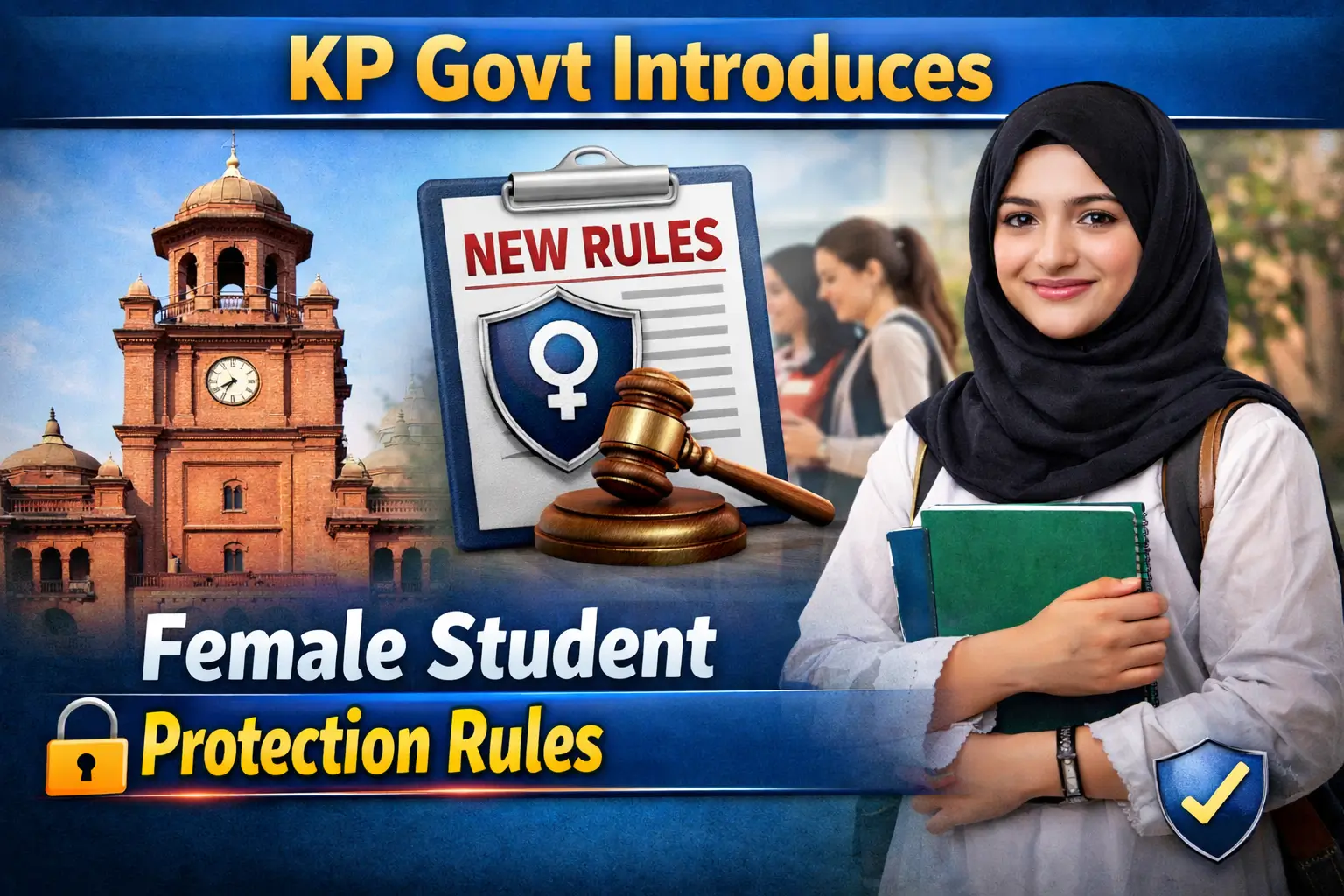
KP Govt Introduces Female Student Protection Rules 2026. The KP Govt introduces female student protection rules 2026 to improve safety in public universities. The new policy restricts one-on-one meetings between male faculty and female students and strengthens complaint systems. These reforms aim to create a safer and more transparent academic environment in Khyber Pakhtunkhwa.

Why the New Rules Were Needed
Khyber Pakhtunkhwa Higher Education Department has officially announced new safety measures for public universities across Khyber Pakhtunkhwa.
The decision follows growing concerns about student safety, harassment complaints, and the need for better protection systems in higher education institutions.
Universities are meant to be safe learning spaces. However, lack of structured complaint mechanisms sometimes discourages female students from reporting issues. These new rules aim to fix that gap.
What Are the New KP Female Student Protection Rules 2026?
The policy includes several important changes.
1. Ban on One-on-One Meetings in Private Offices
Male faculty members are no longer allowed to hold private one-on-one meetings with female students inside closed offices.
Meetings must now take place:
- In open or visible spaces
- With doors open
- Or in the presence of another staff member
This step ensures transparency and reduces the risk of misconduct.

2. Appointment of Female Focal Persons in Each Department
Every department must nominate at least one female faculty member.
This faculty member will:
- Act as a complaint focal person
- Listen to student concerns
- Coordinate with university administration
- Ensure privacy and confidentiality
This creates an accessible reporting channel for female students.
3. Mandatory Awareness Seminars
Universities must organize awareness seminars every quarter.
These seminars will focus on:
- Anti-harassment laws
- Student rights
- Reporting procedures
- Institutional protection policies
Regular awareness programs empower students to understand their legal rights.
Legal Framework Behind the Policy
The new KP rules align with Pakistan’s national harassment laws.

Protection against Harassment of Women at the Workplace Act 2010 provides legal protection against harassment in workplaces, including educational institutions.
Public universities are required to:
- Form inquiry committees
- Establish complaint cells
- Follow due process in investigations
The KP government’s new instructions strengthen enforcement at the university level.
How These Rules Improve Campus Safety
Safer Academic Environment
By limiting closed-door meetings, universities reduce situations that may lead to harassment allegations.
Transparent Complaint System
The appointment of female focal persons builds trust between students and administration.
Increased Awareness
Quarterly seminars educate students about:
- Their legal protections
- Reporting channels
- Available support systems
Awareness leads to prevention.

KP Universities Covered Under This Policy
The policy applies to all public sector universities in the province, including institutions supervised by the Higher Education Department.
Examples include:
- University of Peshawar
- Islamia College University Peshawar
- University of Swat
- Abdul Wali Khan University Mardan
All departments within these universities must comply with the new directives.
Key Policy Changes at a Glance
| Policy Area | Previous Practice | New Rule 2026 |
|---|---|---|
| Faculty Meetings | Private one-on-one allowed | Restricted or monitored |
| Complaint Access | Limited or unclear | Female focal person in each department |
| Awareness Programs | Occasional | Mandatory quarterly seminars |
| Reporting Channel | Often centralized | Department-level support |
This structured change improves monitoring and accountability.
Impact on Female Students
Improved Confidence
Students feel safer approaching faculty when proper safeguards exist.
Better Reporting System
Clear reporting structures reduce fear of retaliation.
Institutional Accountability
Universities must document complaints and follow official procedures.

Impact on Faculty and Administration
The policy also affects staff responsibilities.
Clear Professional Boundaries
Faculty members must follow professional conduct guidelines strictly.
Administrative Oversight
University management must ensure compliance and documentation.
Risk Reduction
Transparent procedures protect both students and faculty from false allegations.
How Universities Should Implement the Policy
To ensure smooth implementation, universities should:
- Issue internal notifications immediately.
- Display reporting procedures on notice boards and websites.
- Train faculty on professional conduct policies.
- Monitor compliance through departmental audits.
Digital portals can also be introduced for anonymous reporting.
Related Education Reforms in KP
The KP government has recently introduced several reforms to improve educational standards, transparency, and regulatory compliance.

These include:
- Strengthening registration requirements for private institutions
- Updating student conduct policies
- Enhancing campus security protocols
Together, these reforms show a broader commitment to educational safety.
FAQs
What are the new KP female student protection rules 2026?
The KP government has restricted private one-on-one meetings between male faculty and female students and mandated female complaint focal persons in each department.
Do the new rules apply to private universities in KP?
Currently, the directive applies to public sector universities under the Higher Education Department.
How can female students file complaints?
Students can contact the designated female faculty focal person in their department or approach the university harassment committee.
Are awareness seminars mandatory under the new policy?
Yes. Universities must conduct seminars at least once every quarter to educate students about anti-harassment laws.
Conclusion
The KP Govt introduces female student protection rules 2026 as a major step toward safer campuses in public universities. By restricting private meetings, appointing female focal persons, and mandating awareness seminars, the government has strengthened institutional safeguards.