
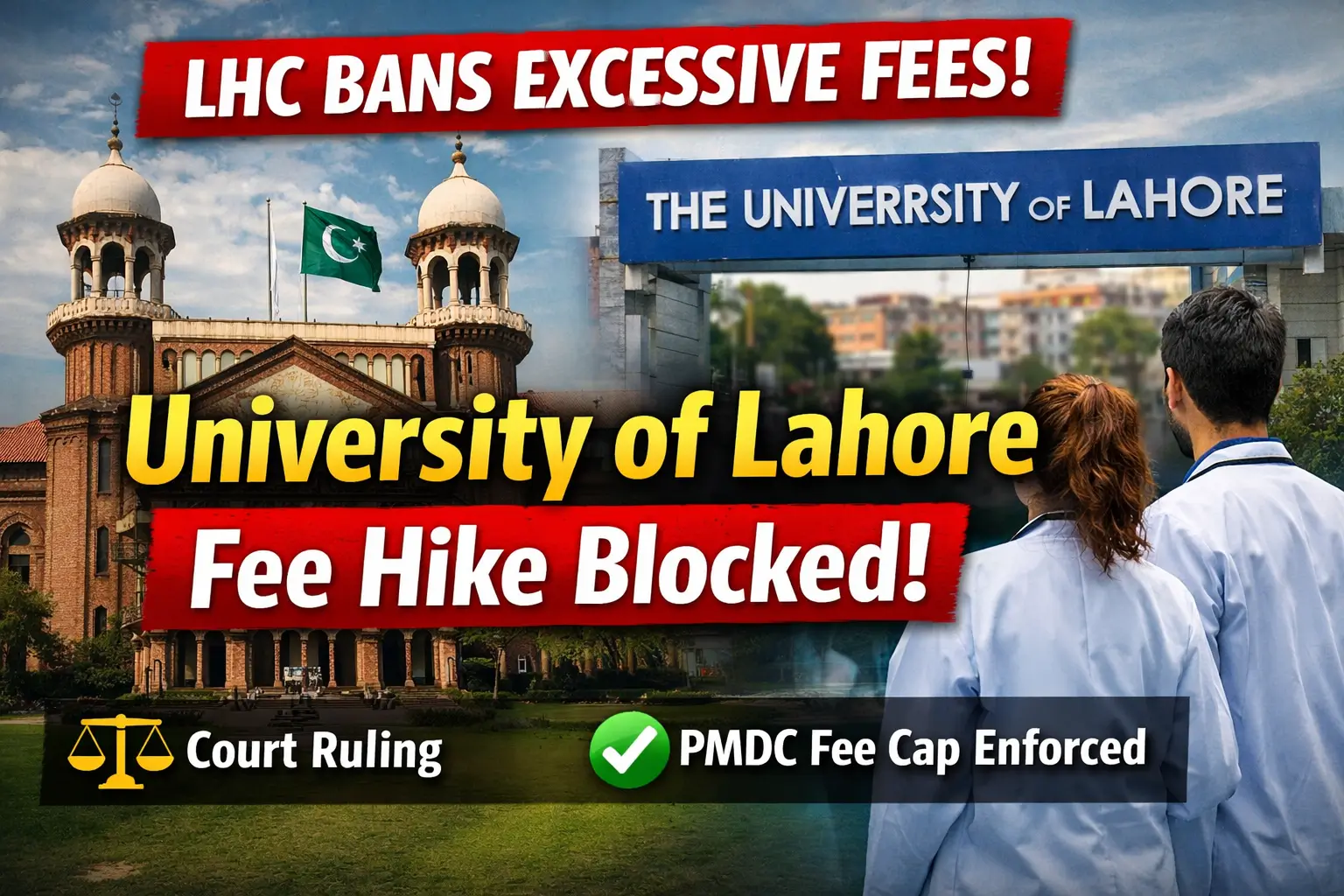
LHC Bars University of Lahore Fees 2026. The LHC bars University of Lahore fees 2026 decision has brought relief to thousands of medical students in Pakistan. The Lahore High Court stopped the university from charging excessive tuition fees and ordered strict compliance with the official fee cap. This ruling may change how private medical colleges set and collect fees in the future.

If you are a student or parent worried about rising medical education costs, this guide explains everything in simple terms.
Why Did LHC Bar University of Lahore From Excessive Fees?
Lahore High Court took action after a formal petition challenged the rising tuition fees in private medical colleges. The case focused on unfair and unregulated fee structures.
The petition was filed by a concerned citizen who argued that private institutions were placing a heavy financial burden on students. Many families struggled to afford the high annual tuition charges.
Justice Khalid Ishaq reviewed the case and directed authorities to follow the official notification regarding fee limits.
PMDC Fee Cap Explained
Pakistan Medical and Dental Council had already issued a notification capping annual tuition fees for private medical colleges at Rs 1.8 million per student.

This means:
| Item | Details |
|---|---|
| Maximum Annual Fee | Rs 1.8 million |
| Applicable To | Private medical colleges |
| Enforced By | PMDC |
| Ordered By Court | Lahore High Court |
The court instructed PMDC to strictly implement this cap and prevent any violations. This step ensures fee transparency and protects students from overcharging.
Impact on University of Lahore
University of Lahore is one of the major private institutions offering medical education in Pakistan. The court barred the university from collecting fees above the approved limit.
What This Means for Students
- Students cannot be charged more than Rs 1.8 million annually.
- Any excessive fee demand can be legally challenged.
- Institutions must maintain transparent fee structures.
- Parents get financial protection under court supervision.
This ruling reduces uncertainty for students planning admissions in 2026.
Why Private Medical Fees Became a National Concern
Medical education in Pakistan is expensive. Many private colleges increase tuition annually without clear justification.

Common issues include:
- Lack of fee regulation
- Sudden annual increases
- Hidden charges
- Admission-related financial pressure
The LHC decision addresses these concerns and sets a legal precedent.
Legal Authority Behind the Decision
The court’s authority comes from its constitutional power to ensure fairness and compliance with regulatory bodies.
24NewsHD reported that the decision aims to protect students from exploitation.
By directing PMDC to enforce the notification, the court strengthened regulatory oversight.

How This Ruling Affects Private Medical Colleges in Pakistan
Although the case focused on the University of Lahore, the implications extend beyond one institution.
Broader Impact
- Increased regulatory monitoring
- Stronger compliance checks
- Reduced arbitrary fee hikes
- Greater accountability
Private colleges must now ensure their tuition structures align with PMDC regulations.
Financial Relief for Middle-Class Families
For many Pakistani families, medical education requires:
- Selling property
- Taking loans
- Using lifetime savings
The Rs 1.8 million cap helps reduce financial stress. It allows more deserving students to pursue medical careers without extreme financial pressure.
Transparency and Student Rights
This ruling reinforces important principles:

Student Protection
Students have the right to affordable education within regulated limits.
Regulatory Compliance
Universities must follow official notifications issued by PMDC.
Legal Recourse
Students can approach courts if institutions violate approved fee caps.
This creates a safer academic environment.
What Should Students Do in 2026?
If you are applying to a private medical college:

- Verify official tuition fee notifications.
- Confirm fee structure before admission.
- Request written documentation of charges.
- Report violations to PMDC.
Always check regulatory updates before paying admission fees.
Comparison: Before and After Court Decision
| Aspect | Before Ruling | After Ruling |
|---|---|---|
| Fee Increases | Often unregulated | Strictly capped |
| Transparency | Limited | Court-monitored |
| Student Protection | Weak | Strengthened |
| Regulatory Enforcement | Inconsistent | Court-backed |
This shows a clear shift toward accountability.
FAQs
What did LHC decide about University of Lahore fees in 2026?
The Lahore High Court barred the university from charging more than Rs 1.8 million annually.
What is the PMDC fee cap for private medical colleges?
The approved annual limit is Rs 1.8 million per student.
Can private colleges increase fees beyond the cap?
No. Any increase beyond the official limit violates regulatory orders.
How does this ruling protect students?
It prevents excessive tuition charges and ensures fee transparency.
Does this decision apply to all private medical colleges?
While the case focused on one institution, PMDC regulations apply nationwide.
Conclusion
The LHC bars University of Lahore fees 2026 ruling marks an important step toward fair medical education in Pakistan. By enforcing the PMDC fee cap of Rs 1.8 million, the court protected students from excessive financial pressure and strengthened regulatory accountability.